

Transforming Somalia’s Agriculture:
Merging Crop Suitability and
Agro-processing for Climate
Resilience and Economic Prosperity
The agricultural sector in Somalia serves not
only as an anchor of the economy but also as an
engine for livelihoods, contributing over 60% of
the national GDP[1]. Although vital, it faces
significant challenges, particularly regarding
crop suitability in the context of climate change
and the underdeveloped agro-processing
industry. With the rising incidence of extreme
weather events, such as heatwaves and floods—
attributes of climate change—the productivity of
key crops including maize, millet, sorghum, and
cowpea is likely to decline. Additionally, the lack
of investment in agro-processing and value
addition has limited the economic potential of
Somalia’s agricultural produce, most of which is
sold in raw form, leading to lower profits and
increased vulnerability to market fluctuations.[2]
Addressing these two interrelated challenges is
crucial for ensuring the sustainability of
agriculture in Somalia and the country’s future
economic growth
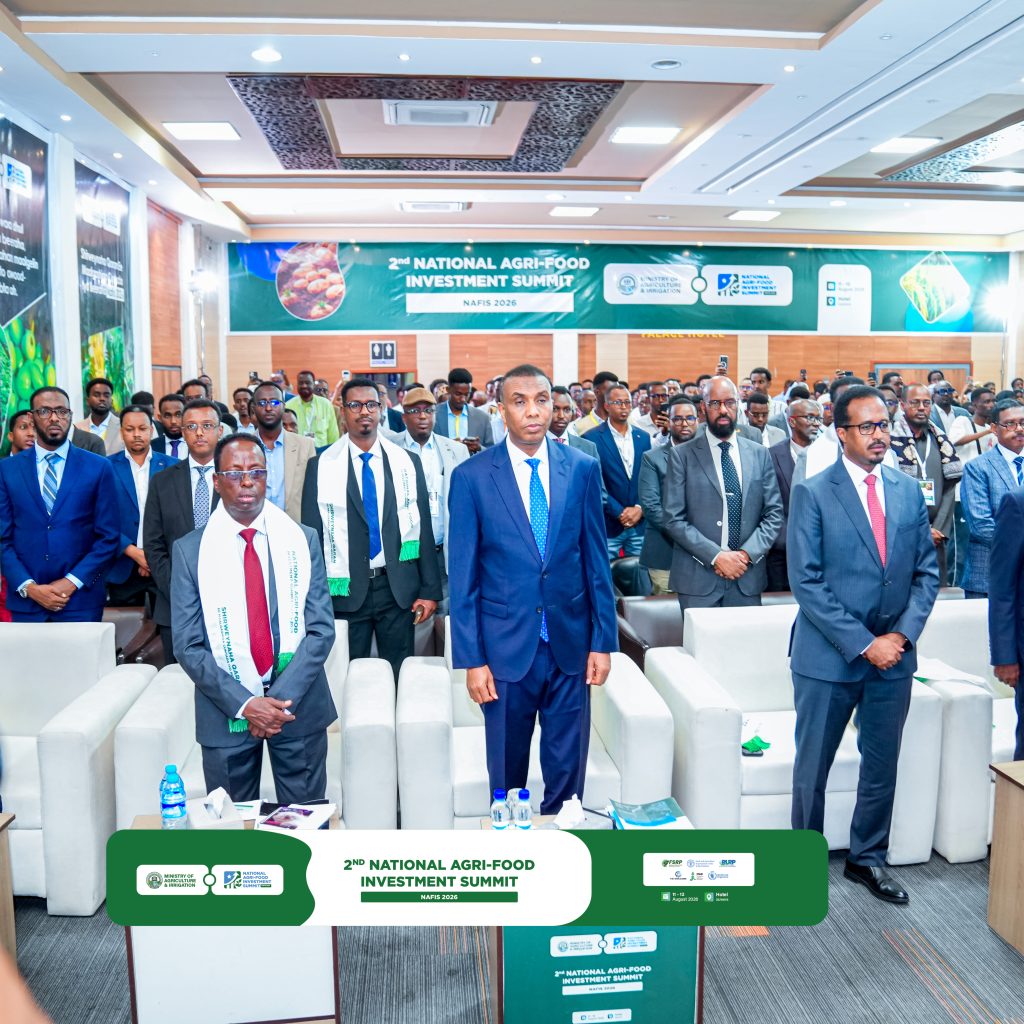
2nd NATIONAL AGRI-FOOD INVESTMENT SUMMIT (NAFIS 2026)